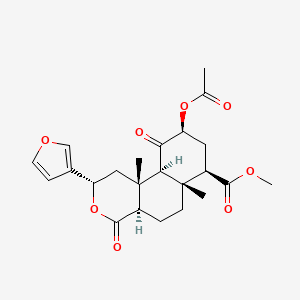
What it is
Salvia divinorum is a psychoactive plant in the mint family with traditional Mazatec ceremonial and healing use. Salvinorin A is its best-characterized psychoactive constituent and a potent selective kappa-opioid receptor agonist. It is not a classic serotonergic psychedelic and is not pharmacologically equivalent to ketamine or opioid agonists such as heroin. [Drug and Alcohol Dependence][NIH / NIDA]
Traditional oral or chewed-leaf contexts differ sharply from rapidly inhaled concentrated extracts in onset, intensity, duration, bodily control, and cultural container.
What people often describe
Controlled human studies describe intense changes in body ownership, external sensory processing, movement, perception, and reality structure. Experiences can be compelling, dysphoric, absurd, amnestic, or difficult to communicate afterward. [Drug and Alcohol Dependence][International Journal of Neuropsychopharmacology]
Pressure, rotation, flattening, splitting, or movement through surfaces can feel physically real.
A new scene, place, life, or repeating mechanism may eclipse awareness of the actual environment.
A person may feel transformed into furniture, a pattern, a page, a machine part, or another character.
Standing, crawling, reaching, laughing, or speaking can occur while situational awareness is absent.
Recall can be fragmentary even when the state looked dramatic from the outside.
Relief, bewilderment, lingering unreality, embarrassment, or fascination may follow.
Removing fall, traffic, fire, water, glass, and balcony hazards—and avoiding unnecessary restraint—can matter more than trying to talk someone through a reality they cannot currently perceive.
How it works
Salvinorin A activates kappa-opioid receptors, which participate in perception, stress, dysphoria, pain, and body-state processing. This receptor pathway distinguishes salvia from classic 5-HT2A psychedelics and NMDA-antagonist dissociatives. [Drug and Alcohol Dependence][NIH / NIDA]
Conditions and uses being studied
Acute psychopharmacology
Small placebo-controlled studies show intense, dose-related effects in carefully screened experienced participants.
Kappa-opioid system
Salvinorin A is a research tool for understanding consciousness, interoception, stress, and non-serotonergic hallucinogenic states.
Mazatec use
Traditional use is historically important but should not be converted automatically into a modern efficacy claim.
Mental health or addiction
There is no robust clinical evidence supporting salvia as a treatment for a diagnosed condition.
Most controlled studies are small and enroll experienced, screened participants. Concentrated retail extracts and unsupervised environments are not represented by those laboratory conditions.
What controlled studies actually did
Human laboratory studies used measured salvinorin A, placebo control, screened participants, continuous observation, repeated dosing across separate sessions, and structured subjective and behavioral measures. They were designed to characterize effects—not to teach extract use or establish treatment. [Drug and Alcohol Dependence][Psychopharmacology]
This summarizes controlled research and approved-product context. It is not a recommendation for self-treatment, dosing, mixing, or medication changes. Screening, verified formulation, monitoring, support, and follow-up are part of the studied intervention.
Selected registered trials
No therapeutic human trial is listed for this profile. The evidence section distinguishes laboratory, observational, traditional-use, and toxicology records from clinical efficacy research.
Registry status can change. Open the official record for current eligibility, locations, enrollment, and study status.
Know the red flags before the journey
Direct interaction evidence is sparse. Salvia’s abrupt dissociation and loss of environmental awareness make any substance that adds sedation, confusion, cardiovascular stress, or impaired coordination more concerning.
Alcohol, sedatives, or other dissociatives
Combining salvia with alcohol, benzodiazepines, opioids, ketamine, DXM, or other impairing substances can increase falls, aspiration, respiratory concerns, amnesia, and inability to recognize danger. Absence of direct trials does not make these combinations safe. [NIH / NIDA]
Coordination, awareness, breathing, and memory may be more compromised.
Reality loss and unsafe movement may become harder to contain or interpret.
Perceptual intensity, panic, and confusion may increase unpredictably.
Direct combination data are limited; medication changes should never be improvised for salvia use.
Common reasons to pause, screen more carefully, or refer out
Reality disruption and post-acute meaning-making may worsen instability.
Human safety data are too limited to assume low risk.
Safety evidence is insufficient.
Abrupt uncoordinated movement can be hazardous even during a short experience.
Traffic, heights, water, flame, and hard surfaces create foreseeable risk.
Retail labels and informal potency ratios may not reliably predict delivered exposure.
Most warnings are based on pharmacology, observed behavior, impairment principles, and risk inference rather than controlled drug-combination trials. That limitation should be stated, not mistaken for reassurance. [Drug and Alcohol Dependence][NIH / NIDA]
Risks and research exclusions
Falls, wandering, panic, dysphoria, loss of situational awareness, amnesia, smoke exposure, and unsafe restraint are central acute concerns. Concentrated extracts compress the transition from ordinary awareness to profound impairment. [U.S. DEA][International Journal of Neuropsychopharmacology]
A person may move while unable to perceive the actual room, stairs, street, water, or flame.
Kappa-opioid activation can produce fear, alienation, bodily threat, or an inescapable alternate reality.
Extract concentration, distribution on material, and inhalation efficiency can make effects inconsistent.
Persistent effects appear uncommon in small studies, but diverse and repeated-use safety evidence is limited.
United States
Salvia divinorum and salvinorin A are not currently listed in the federal Controlled Substances Act schedules, but many states and municipalities regulate possession, sale, age, or use. Federal unscheduled status is not the same as universal legality or FDA approval. [U.S. DEA]
This summary is general educational information, not legal advice. Check current rules with relevant authorities in your country, state, province, and municipality before relying on it.
Selected sources
- NIH / PubChemSalvinorin A compound record ↗
- Drug and Alcohol Dependence · 2011Human psychopharmacology and dose-effects of salvinorin A ↗
- Psychopharmacology · 2011Acute and post-acute effects of salvinorin A in humans ↗
- International Journal of Neuropsychopharmacology · 2015Salvinorin A, sensory perception, interoception, and body ownership ↗
- U.S. DEA · currentSalvia divinorum drug fact sheet ↗
- NIH / NIDAPsychedelic and dissociative drugs research report ↗