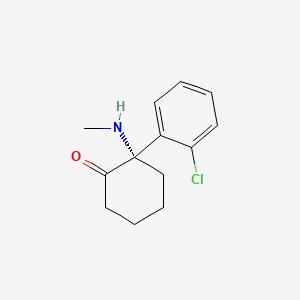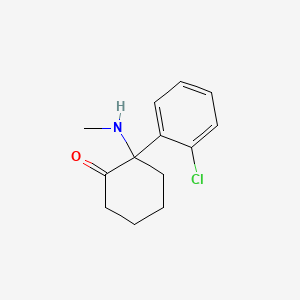
What it is
Ketamine is a synthetic dissociative anesthetic and a mixture of two mirror-image molecules. It has long-standing medical use for anesthesia. Lower-dose racemic ketamine has also been studied and used off-label for mood disorders and pain. Esketamine is the S-enantiomer, formulated as the FDA-approved nasal product Spravato with specific indications and a restricted safety program. [NIH / PubChem][NIH / DailyMed][NIH / DailyMed]
Racemic ketamine injection, FDA-approved intranasal esketamine, and compounded lozenges or nasal products are not interchangeable. Approval, evidence, dosing, monitoring, and quality oversight differ.
What people often describe
Dissociation can range from mild distance and softened body boundaries to a near-total break from ordinary surroundings. Some people find the state peaceful or perspective-shifting; others find it disorienting, nauseating, frightening, or difficult to remember. [NIH / DailyMed][NIH / NIDA]
Weight, position, pain, or physical edges can seem altered, numb, oversized, tiny, or absent.
Distance, scale, depth, and orientation can bend into a dreamlike inner landscape.
Thought may become sparse, symbolic, detached, philosophical, or difficult to organize.
A short period may feel extended, fragmented, or outside ordinary time.
Standing, walking, speaking, and making decisions can become unsafe even if the mind feels calm.
Slang for profound dissociation can involve immobility, panic, amnesia, aspiration, or inability to seek help.
Feeling mentally “back” does not guarantee normal balance, blood pressure, judgment, or reaction time. FDA-approved esketamine requires direct observation and at least two hours of monitoring.
How it works
Ketamine is a noncompetitive NMDA receptor antagonist that alters glutamate signaling. Depression research also examines downstream AMPA signaling, synaptic plasticity, and network changes. Those hypotheses do not make every dissociative experience therapeutic, and racemic ketamine is not the same product as esketamine. [NIH / PubChem][NIH / DailyMed]
Conditions and uses being studied
Anesthesia
Injected ketamine has decades of approved anesthetic use. That approval does not automatically extend to psychiatric indications or non-injected products.
Treatment-resistant depression
Controlled trials support rapid antidepressant effects for IV racemic ketamine and intranasal esketamine, with different regulatory status and protocols.
Esketamine nasal spray
Spravato is approved for adult treatment-resistant depression and, with an oral antidepressant, depressive symptoms in adults with acute suicidal ideation or behavior.
Chronic pain and other conditions
Ketamine is used and studied in pain and other settings, but evidence and risk-benefit vary by condition, route, and protocol.
Rapid symptom change is not the same as durable recovery. Maintenance, relapse, adverse effects, psychotherapy context, cost, access, and repeated-exposure risks remain practical parts of the evidence.
What controlled studies actually did
Research has compared monitored IV ketamine infusions with electroconvulsive therapy and has tested supervised intranasal esketamine schedules. The route, formulation, setting, and observation period are part of the intervention; online or at-home compounded products are a different evidence and safety question. [New England Journal of Medicine][JAMA Psychiatry][NIH / DailyMed]
This summarizes controlled research and approved-product context. It is not a recommendation for self-treatment, dosing, mixing, or medication changes. Screening, verified formulation, monitoring, support, and follow-up are part of the studied intervention.
Selected registered trials
Registry status can change. Open the official record for current eligibility, locations, enrollment, and study status.
Know the red flags before the journey
Ketamine can impair consciousness, coordination, breathing, and blood-pressure control. A full medication and substance list matters, especially for anything sedating or stimulating.
Alcohol, opioids, benzodiazepines, and other CNS depressants
Combining sedating substances can deepen sedation, impair airway protection, and increase respiratory risk. The current esketamine label specifically calls for close monitoring when used with central nervous system depressants. [NIH / DailyMed][NIH / DailyMed]
Amphetamines, methylphenidate, modafinil, cocaine, and other activating substances can add blood-pressure and heart-rate stress.
The esketamine label advises close blood-pressure monitoring with monoamine oxidase inhibitors.
Prescription sleep aids, sedating antihistamines, gabapentinoids, and muscle relaxants can add impairment.
Quality, absorption, instructions, and observation may differ; compounded drugs are not FDA-evaluated for safety, effectiveness, or quality before marketing.
Common reasons to pause, screen more carefully, or refer out
The Spravato label contraindicates use when a blood-pressure rise poses serious risk, including aneurysmal vascular disease and arteriovenous malformation.
This is a labeled contraindication for esketamine nasal spray.
Blood pressure should be assessed because acute increases can be clinically significant.
Current labeling warns of potential fetal harm and advises against use in pregnancy.
Dissociation and perceptual changes may worsen instability and require individual specialist assessment.
Driving, walking alone, water exposure, stairs, and unsupervised recovery can become dangerous while coordination and judgment are impaired.
The strongest product-specific guidance comes from official ketamine and esketamine labels. Individual off-label protocols differ, so “ketamine clinic” does not by itself identify the formulation, evidence standard, or safety system. [NIH / DailyMed][NIH / DailyMed][U.S. FDA]
Risks and research exclusions
Sedation, dissociation, blood-pressure increases, nausea, dizziness, impaired coordination, and respiratory depression are central acute concerns. Abuse and misuse are recognized risks. Repeated heavy or nonmedical exposure is associated with urinary and bladder injury, and long-term cognitive and liver risks remain concerns. [NIH / DailyMed][NIH / DailyMed]
A person may be unable to protect themselves or communicate distress. Respiratory depression is part of current labeled risk information.
Increases can peak after administration. Severe headache, chest pain, shortness of breath, neurologic symptoms, or collapse require urgent help.
Long-term off-label use and misuse have been associated with ulcerative or interstitial cystitis and urinary symptoms.
Repeated use can become compulsive, require more drug for the same effect, and shift away from the original intention.
United States
Ketamine injection is FDA-approved for induction and maintenance of general anesthesia. Racemic ketamine is not FDA-approved as a depression treatment. Spravato, an esketamine nasal spray, has specific depression indications and a restricted REMS program. Ketamine and esketamine are Schedule III controlled substances. [NIH / DailyMed][NIH / DailyMed][U.S. eCFR]
This summary is general educational information, not legal advice. Check current rules with relevant authorities in your country, state, province, and municipality before relying on it.
Selected sources
- NIH / PubChemKetamine compound record and chemical identifiers ↗
- NIH / DailyMed · 2026Ketalar official prescribing information ↗
- NIH / DailyMed · 2026Spravato official prescribing information and boxed warning ↗
- New England Journal of Medicine · 2023ELEKT-D ketamine versus ECT comparative trial ↗
- JAMA Psychiatry · 2025Randomized phase 4 esketamine monotherapy trial ↗
- U.S. FDA · current alertsCompounding risk alerts, including ketamine products ↗
- NIH / NIDAPsychedelic and dissociative drugs overview ↗
- U.S. eCFR · current21 CFR § 1308.13 — Schedule III ↗