What it is
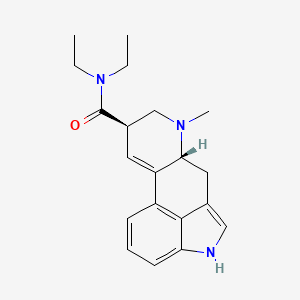
LSD is a highly potent lysergamide first synthesized from ergot-related chemistry. It is active at very small measured quantities and produces long-lasting changes in perception, cognition, emotion, and sense of self. Because illicit blotter cannot be verified by appearance, the research compound and a street product are not interchangeable. [NIH / PubChem][NIH / NIDA]
LSD can be placed on blotter, but blotter is only a delivery material. Potency can vary, and other compounds may be misrepresented as LSD. A printed design does not identify contents.
What people often describe
LSD often has an energized, lucid, and visually textured quality. The same sensitivity that can make music, nature, humor, and connection feel expansive can make conflict, crowds, confusing environments, or anxious thoughts feel impossible to escape. [NIH / NIDA]
Edges breathe, textures organize, colors intensify, and closed-eye imagery can become intricate.
Ideas connect quickly and can feel brilliant, comic, profound, circular, or impossible to finish.
Minutes may stretch or repeat, and the acute arc commonly occupies most of a waking day.
Sound can feel spatial, emotional, tactile, visual, or fused with other senses.
Perspective and boundaries may loosen; that can feel liberating or deeply destabilizing.
Activation, restlessness, jaw or muscle tension, and delayed sleep may continue after peak effects fade.
A setting that feels fine for one hour may not work for ten. Weather, transportation, privacy, food, sleep, responsibilities, and support need a longer horizon than with shorter-acting psychedelics.
How it works
LSD binds several serotonin receptors; partial agonism at 5-HT2A is central to its psychedelic effects. It also has activity at other serotonin and dopamine receptors. Researchers study changes in brain-network communication, but no single scan or receptor story explains the whole experience. [NIH / PubChem][NIH / NIDA]
Conditions and uses being studied
Generalized anxiety disorder
A 2025 dose-ranging randomized trial found week-four anxiety improvements in the 100- and 200-microgram groups and supported continued phase 3 development.
Anxiety with or without serious illness
A 42-person crossover trial reported anxiety and depression reductions after two monitored sessions, with one transient treatment-related serious anxiety event.
Alcohol-use disorder
Historical and modern research has explored alcohol-related outcomes, but contemporary confirmatory evidence remains limited.
Other conditions
Research includes cluster headache, depression, pain, and healthy-volunteer neuroscience. Results cannot be generalized across conditions.
Psychedelic trials face unusually hard blinding and expectancy problems because participants can often tell whether they received an active drug. Supportive contact and setting are also part of many protocols.
What controlled studies actually did
Recent anxiety studies used one or two oral sessions in carefully screened adults with extended monitoring and follow-up. One trial compared several fixed doses; another studied two 200-microgram sessions. These are descriptions of controlled research, not self-administration guidance. [JAMA][Biological Psychiatry]
This summarizes controlled research and approved-product context. It is not a recommendation for self-treatment, dosing, mixing, or medication changes. Screening, verified formulation, monitoring, support, and follow-up are part of the studied intervention.
Selected registered trials
Registry status can change. Open the official record for current eligibility, locations, enrollment, and study status.
Know the red flags before the journey
LSD’s long duration, cardiovascular activation, and profound perceptual effects make medication review and psychiatric history important. Never stop psychiatric medication on your own to change a psychedelic response.
Lithium + classic psychedelics
An analysis of online reports found a strong seizure signal with lithium and classic psychedelics. The data are imperfect, but the severity of the reported events makes this a major red flag rather than an experiment. [Pharmacopsychiatry]
SSRIs, SNRIs, antipsychotics, and other psychiatric medicines may blunt, alter, or unpredictably shape effects; abrupt medication changes create separate risks.
Stimulants can add heart-rate, blood-pressure, agitation, and anxiety load to an already activating experience.
Human combination evidence is limited. A pharmacist or prescriber should review the actual medicine and dose rather than relying on a generic interaction list.
Cannabis may sharply intensify psychedelic effects for some people; alcohol and sedatives add impaired judgment and coordination.
Common reasons to pause, screen more carefully, or refer out
Clinical trials commonly exclude these histories because prolonged activation and perceptual change may precipitate destabilization.
A seizure history, lithium use, or other threshold-lowering factors warrant specialist review.
Temporary heart-rate and blood-pressure increases may matter in people with unstable disease.
Safety evidence is insufficient, and trials generally exclude pregnancy and breastfeeding.
Suicidality, panic, coercion, conflict, or lack of an all-day support and transportation plan can amplify risk.
Unverified products introduce potency, substitution, and contamination risks not represented in pharmaceutical research.
Classic-psychedelic interaction literature remains sparse. Known signals, pharmacology, trial exclusions, and limited prospective work should be weighed separately rather than treated as equally certain. [Journal of Psychopharmacology][Clinical Pharmacology & Therapeutics]
Risks and research exclusions
Panic, paranoia, dangerous judgment, accidents, prolonged wakefulness, and temporary cardiovascular changes are central acute risks. Rare persistent perceptual symptoms and prolonged psychiatric destabilization are reported, though incidence is difficult to estimate. [NIH / NIDA][JAMA]
A long acute arc can magnify fear or looping thoughts. Calm support may help, but severe agitation, violence, chest pain, seizure, or loss of consciousness needs emergency care.
Driving, heights, traffic, water, weather, and wandering become hazardous when perception and judgment are altered.
Activation can outlast desired effects. Persistent insomnia, mania-like symptoms, or psychosis requires urgent professional assessment.
Potent non-LSD compounds can be sold as acid. Unexpected numbness, severe vasoconstriction, or an unusually bitter product is not a reliable diagnostic, but uncertainty itself adds risk.
United States
LSD has no FDA-approved therapeutic product and remains federally controlled in Schedule I. Research authorization, local decriminalization, and possession law are different concepts. State and local rules can differ and change. [U.S. eCFR][U.S. FDA]
This summary is general educational information, not legal advice. Check current rules with relevant authorities in your country, state, province, and municipality before relying on it.
Selected sources
- NIH / PubChemLSD compound record and chemical identifiers ↗
- NIH / NIDAPsychedelic and dissociative drugs overview ↗
- JAMA · 2025Phase 2b randomized dose-ranging trial in generalized anxiety disorder ↗
- Biological Psychiatry · 2023Randomized crossover trial for anxiety with and without serious illness ↗
- Clinical Pharmacology & Therapeutics · 2025Paroxetine pre-administration and the acute LSD response ↗
- Journal of Psychopharmacology · 2024Systematic review of classic-psychedelic drug interactions ↗
- Pharmacopsychiatry · 2021Online reports involving lithium and classic psychedelics ↗
- U.S. FDA · 2026Psychedelic drugs: considerations for clinical investigations ↗
- U.S. eCFR · current21 CFR § 1308.11 — Schedule I ↗