What it is
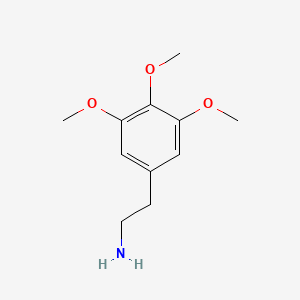
Mescaline is a naturally occurring phenethylamine psychedelic found in peyote and several columnar cacti, and it can also be synthesized. A pure research compound, dried cactus, tea, powder, and extract can differ dramatically in composition, concentration, cultural meaning, and legal context. [NIH / PubChem][Translational Psychiatry]
The compound page explains the molecule. Peyote and San Pedro/Huachuma deserve separate botanical and cultural profiles because plant identity, alkaloid variability, tradition, conservation, and law are not captured by a chemical formula.
What people often describe
Controlled comparisons describe a classic psychedelic state with visual, emotional, cognitive, and bodily changes. Mescaline’s effects build more slowly and last longer on average than psilocybin and LSD in the compared study conditions. [Neuropsychopharmacology][Translational Psychiatry]
Textures, geometry, depth, light, and ordinary objects may become vivid or rhythmically organized.
Warmth, tingling, energy, heaviness, nausea, and repeated awareness of the stomach are common themes.
Affection, grief, humor, tenderness, and a sense of beauty can become easier to access.
Slow onset and long duration can make impatience, fatigue, or practical conflict more consequential.
Alertness and cardiovascular activation can continue even as the psychedelic intensity softens.
People may feel peaceful, wrung out, stimulated, nauseated, or unable to sleep at the expected time.
Food, hydration, weather, mobility, medications, transportation, nighttime support, and the ability to leave a difficult environment all matter across a long arc.
How it works
Mescaline is a classic serotonergic psychedelic whose subjective effects depend strongly on 5-HT2A receptor activation, with activity at other receptors also contributing. Human studies show dose-related subjective and autonomic effects and a slower time to peak than several other classic psychedelics. [Translational Psychiatry][Clinical Pharmacokinetics]
Conditions and uses being studied
Acute effects and pharmacokinetics
Randomized studies in healthy participants characterize dose response, duration, cardiovascular changes, and metabolism.
Mescaline, LSD, and psilocybin
A controlled crossover found broadly similar altered-state profiles at compared intensities but a longer mescaline duration.
Mood, addiction, and spiritual use
Historical clinical work and ceremonial observations do not substitute for modern patient efficacy trials.
Diagnosed conditions
There is not yet a robust controlled evidence base supporting mescaline treatment for depression, anxiety, or substance-use disorders.
Healthy-volunteer pharmacology answers important safety and phenomenology questions, but it does not establish treatment effectiveness. Botanical products add further uncertainty about identity and concentration.
What controlled studies actually did
Recent studies used synthesized mescaline hydrochloride, extensive screening, placebo-controlled crossover designs, prolonged observation, repeated vital signs, blood sampling, and follow-up. The long monitoring window is part of the protocol, not an optional accessory. [Translational Psychiatry][Clinical Pharmacokinetics]
This summarizes controlled research and approved-product context. It is not a recommendation for self-treatment, dosing, mixing, or medication changes. Screening, verified formulation, monitoring, support, and follow-up are part of the studied intervention.
Selected registered trials
Registry status can change. Open the official record for current eligibility, locations, enrollment, and study status.
Know the red flags before the journey
Mescaline’s long duration, serotonergic effects, and cardiovascular activation make medication review and all-day risk planning important. Plant products add uncertainty about other alkaloids and concentration.
Lithium + classic psychedelics
Online-report analysis found a serious seizure signal when lithium was combined with classic psychedelics. The evidence is imperfect, but the potential severity makes this a major contraindication signal rather than an invitation to test the combination. [Pharmacopsychiatry]
Responses may be blunted, altered, or unpredictable; abrupt medication changes create separate risk.
Heart rate, blood pressure, anxiety, and overheating burdens may add together.
Judgment, coordination, nausea, and emotional volatility can become harder to assess over a long session.
Concentrates or combined plants may contain variable alkaloids, contaminants, or undisclosed substances.
Common reasons to pause, screen more carefully, or refer out
Long activation and sleep disruption may precipitate destabilization.
Threshold-lowering factors deserve specialist review.
Temporary increases in heart rate and blood pressure may be clinically important.
Safety evidence is insufficient.
Conflict, coercion, weather exposure, or lack of sustained support can magnify harm.
Species names, seller claims, and appearance do not establish alkaloid content or purity.
Direct drug-combination data are limited. Human pharmacology, known receptor effects, trial exclusions, case reports, and broader classic-psychedelic interaction evidence should be weighed separately. [Journal of Psychopharmacology][Pharmacopsychiatry]
Risks and research exclusions
Nausea and vomiting, anxiety, prolonged wakefulness, impaired judgment, temporary cardiovascular activation, accidents, and psychiatric destabilization are central concerns. Botanical variability and product substitution add separate risks. [Translational Psychiatry][British Journal of Clinical Pharmacology]
Support, hydration, temperature, transportation, and sleep planning may be needed well beyond the emotional peak.
Blood pressure and heart rate rose in controlled studies, even in screened healthy adults.
Gastrointestinal effects can be intense and may contribute to dehydration or aspiration risk.
Pure compound data do not predict the strength or full contents of cactus preparations and extracts.
United States
Mescaline is federally controlled in Schedule I in the United States. Peyote has a narrow federal regulatory exemption for specified Native American Church use; that exemption does not generally legalize mescaline, other cacti, extracts, or nonqualifying use. [U.S. eCFR][U.S. eCFR]
This summary is general educational information, not legal advice. Check current rules with relevant authorities in your country, state, province, and municipality before relying on it.
Selected sources
- NIH / PubChemMescaline compound record ↗
- Translational Psychiatry · 2024Acute dose-dependent effects of mescaline ↗
- Clinical Pharmacokinetics · 2025Pharmacokinetics and pharmacodynamics of oral mescaline ↗
- Neuropsychopharmacology · 2023Comparative effects of mescaline, LSD, and psilocybin ↗
- British Journal of Clinical Pharmacology · 2025Safety pharmacology of acute mescaline ↗
- U.S. eCFR · current21 CFR § 1307.31 — Native American Church peyote exemption ↗
- Journal of Psychopharmacology · 2024Systematic review of classic-psychedelic drug interactions ↗
- Pharmacopsychiatry · 2021Online reports involving lithium and classic psychedelics ↗
- U.S. eCFR · current21 CFR § 1308.11 — Schedule I controlled substances ↗